Mastering Detail: The Real Secret to Choosing Detailed Watercolor Brushes
Ever felt the pull to paint something intricate and lifelike—a delicate botanical leaf, a portrait full of character, or a tiny scene in an urban sketchbook? If so, you’ve probably asked the big question: What are the best detailed watercolor brushes?
The common misconception is painfully simple: finer lines require a smaller brush. This leads beginners straight to the dizzying array of micro-brushes—sizes like 10/0, 5/0, and 2/0 that look more like needles than painting tools. When I started my journey into realistic botanical art, I bought them all. Here’s what I learned the hard way.
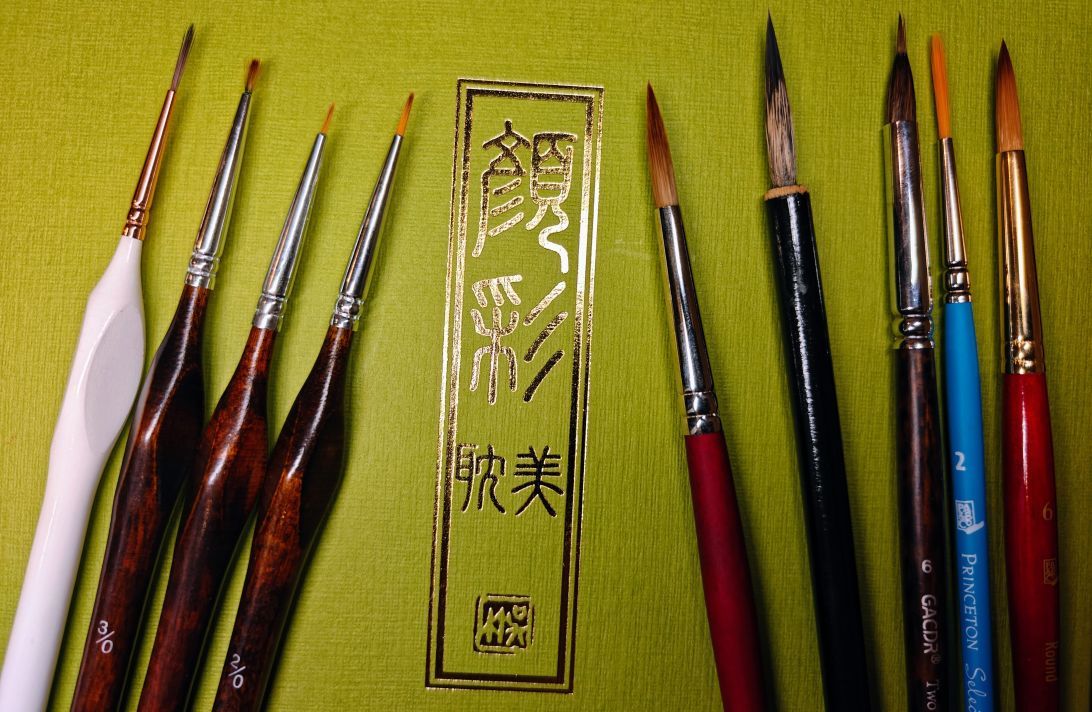
The Tiny Brush Trap: Why Smaller Isn’t Better
Let’s play out the scenario. You load your 10/0 brush with a minuscule bead of pigment and touch it to your rough watercolor paper. Where does the water go? It’s sucked into the paper or evaporates almost instantly. How far do you get? One frustrating millimeter.
The truth is, the smallest brush is almost never the answer. The real secret isn’t in the size of the ferrule, but in the quality of the point.
The Golden Rule: Seek the Point, Not the Size
A perfect, sharp point that springs back is your greatest asset. This means you can use a size 2, or even a size 6 brush for stunning detail if it comes to a fine tip and holds its shape. The larger body of the brush holds more pigment and water, allowing you to paint longer, continuous lines without constantly re-dipping.
My Essential Recommendations for Detailed Watercolor Brushes
- Start Here: DO NOT buy brushes smaller than size 0. Your best, most versatile starting point is a high-quality size 0, 1, or 2 with a superior point.
- The “Magic” Brush: A snappy, synthetic round in size 2 is the ultimate beginner tool for detail work. It offers control, capacity, and a reliable point.
- The Pro Insight: You don’t need to spend a fortune. Many affordable synthetic brushes have excellent points. However, a better-quality brush offers more consistency and versatility, making your practice smoother.
- If you’re looking for a complete starter kit, I have a separate guide on the perfect Beginner Brush Trio that covers all the essentials.
Your Detailed Watercolor Brushes Toolkit: What to Try Next
Once you’ve mastered the basic round, a world of specialized detail brushes opens up:
- Liner/Rigger Brushes: Long bristles for elegant, continuous lines (like branches or whiskers).
- Spotter Brushes: Very short bristles for ultimate control in tiny areas.
- Reservoir Brushes: For long drawing sessions without re-dipping.
- Surprise MVP: Calligraphy brushes! Their incredible points and fluidity are amazing for detail work.
My Top Picks: Where to Begin Your Search
The No-Lose, Beginner-Friendly Choice:
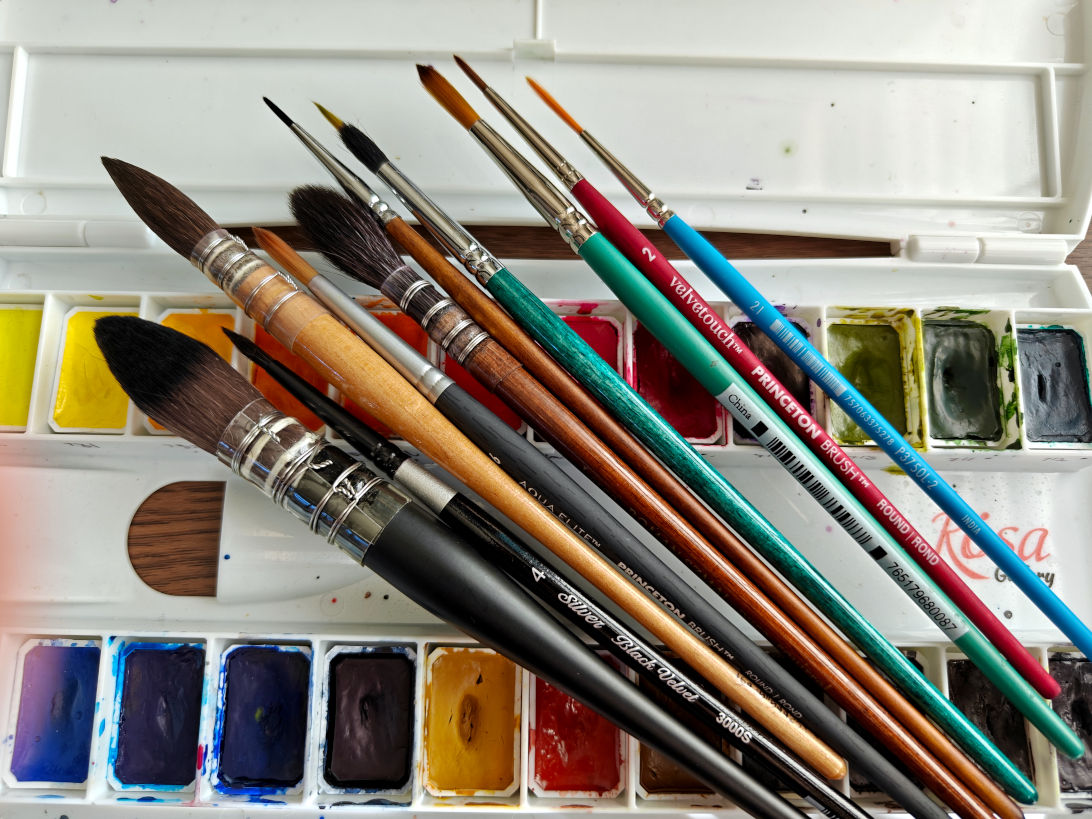
For a guaranteed great point, I consistently recommend the Princeton Velvetouch series. Check out my guide on Princeton brushes. Their synthetic brushes are affordable, durable, and have one of the best points on the market for detail.
If You Insist on a Set:
I understand the appeal! If you want a dedicated micro-brush set to experiment with, look for a set that includes a mix of rounds and a possible liner brush. Inexpensive detailed brushes made out of nylon is a viable option here.
Remember, the best detailed watercolor brush is the one that acts as a true extension of your hand, holding enough paint to let you focus on your art, not your tool. Start with a great point, and the details will follow.
Materials Recommended:
📌As an Amazon Associate I earn from qualifying purchases. Links earn retail commissions at no cost to you. Items may be personal, discounted, or gifted.
- Princeton small brush: → Princeton Heritage brush size 2 Amazon or Princeton Velvetouch size 2 Amazon– Most of the Princeton brushes are great choice for beginner and pro alike. Look for ones with more snap if you are a beginner. Princeton Brushes on DickBlick, Princeton Brushes on Jackson’s Art. Check my guide on Princeton Brushes
- Calligraphy brushes : → Calligraphy Brushes Amazon – natural bristles offer a lot of control and super fine point. They look more like a liner.
- Detailed brushes for Pros : → Black Silver Velvet Set Amazon – excellent manufacturer and high quality brushes, but they are soft, which is not a first choice for the beginner. Black Silver Velvet Set on DickBlick, Black Silver Velvet Set on Jackson’s Art
- Set of detailed brushes: → Creative Mark Brush set Amazon I enjoy using this set a lot. Very snappy nylon bristles, which keep their shape well.