Watercolor Brush Sizes Demystified: A Simple Guide to Rounds, Mops & More
Watercolor Brush Sizes: Your Guide to Rounds, Mops, & What Those Numbers Actually Mean
Have you ever ordered a “size 6” round online, excitedly opened the package, and thought, “Wait, this feels tiny…”? Or maybe you held a “size 10 mop” and were shocked by how huge it was? You’re not going crazy. You’ve just discovered the not-so-secret secret of watercolor: brush sizing is a unstandardized, wild world.
Those little numbers on the handle? Think of them as a friendly suggestion from the manufacturer, not a strict rule. A size 10 round and a size 10 mop are as different as a teacup and a bucket. Let’s grab a coffee and untangle this together. I’ll show you how sizing generally works, why you can’t always trust the number, how to choose watercolor brush size and my best tips for shopping online without any nasty surprises.
Let’s Get This Straight: The Number is a Guideline, Not a Gospel
Here’s the most important thing to remember: A brush’s size number (like 0, 6, or 10) really only tells you how it compares to other brushes of the same shape from the same brand. It’s not a universal measurement.
This is why you can line up two “size 8” rounds from different brands—even good ones!—and one might have a fatter belly or a longer hair. It’s frustrating, but once you know the game, you can play it.
A Friendly Tour of Sizing by Brush Shape
While it’s not perfect, there are some general patterns within each brush family. Here’s the down-low.
1. Round Brushes: Your Go-To Best Friend
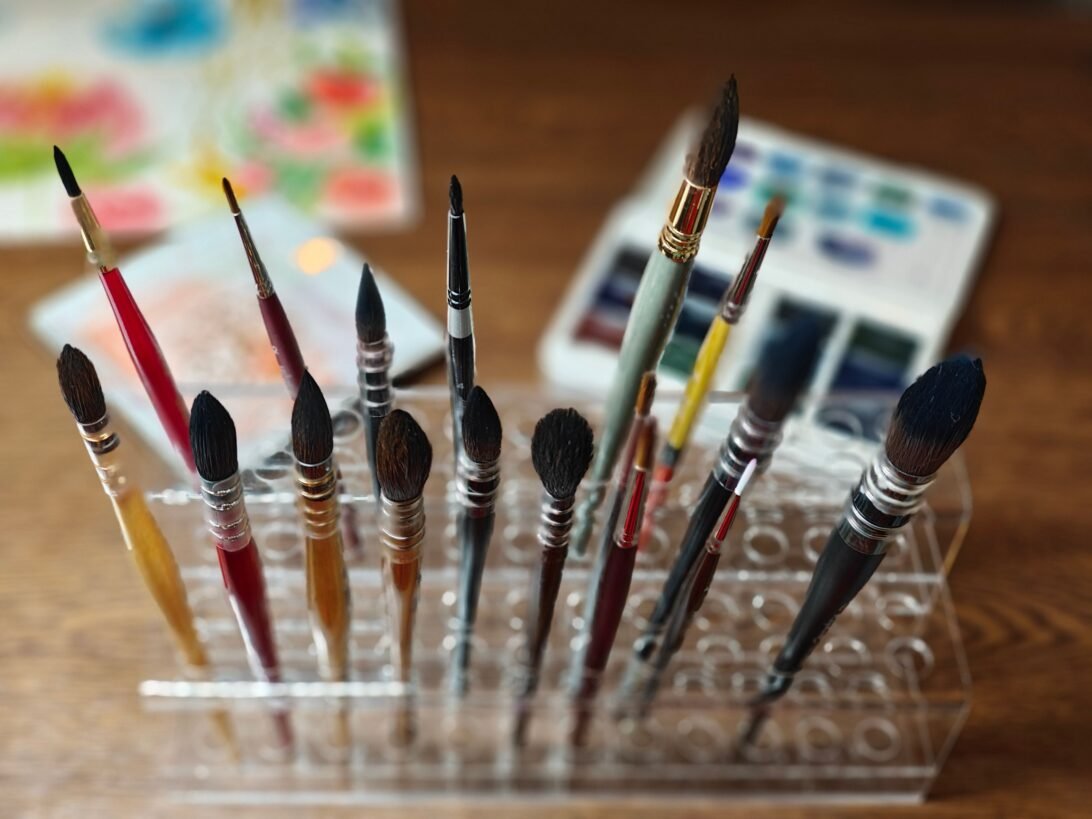
Rounds are your most-used brushes, and thankfully, their sizing is the most consistent across the big brands.
- The Simple Idea: The number loosely matches the width of the ferrule (that metal cuff holding the hairs). Bigger number = bigger ferrule = bigger, thirstier brush.
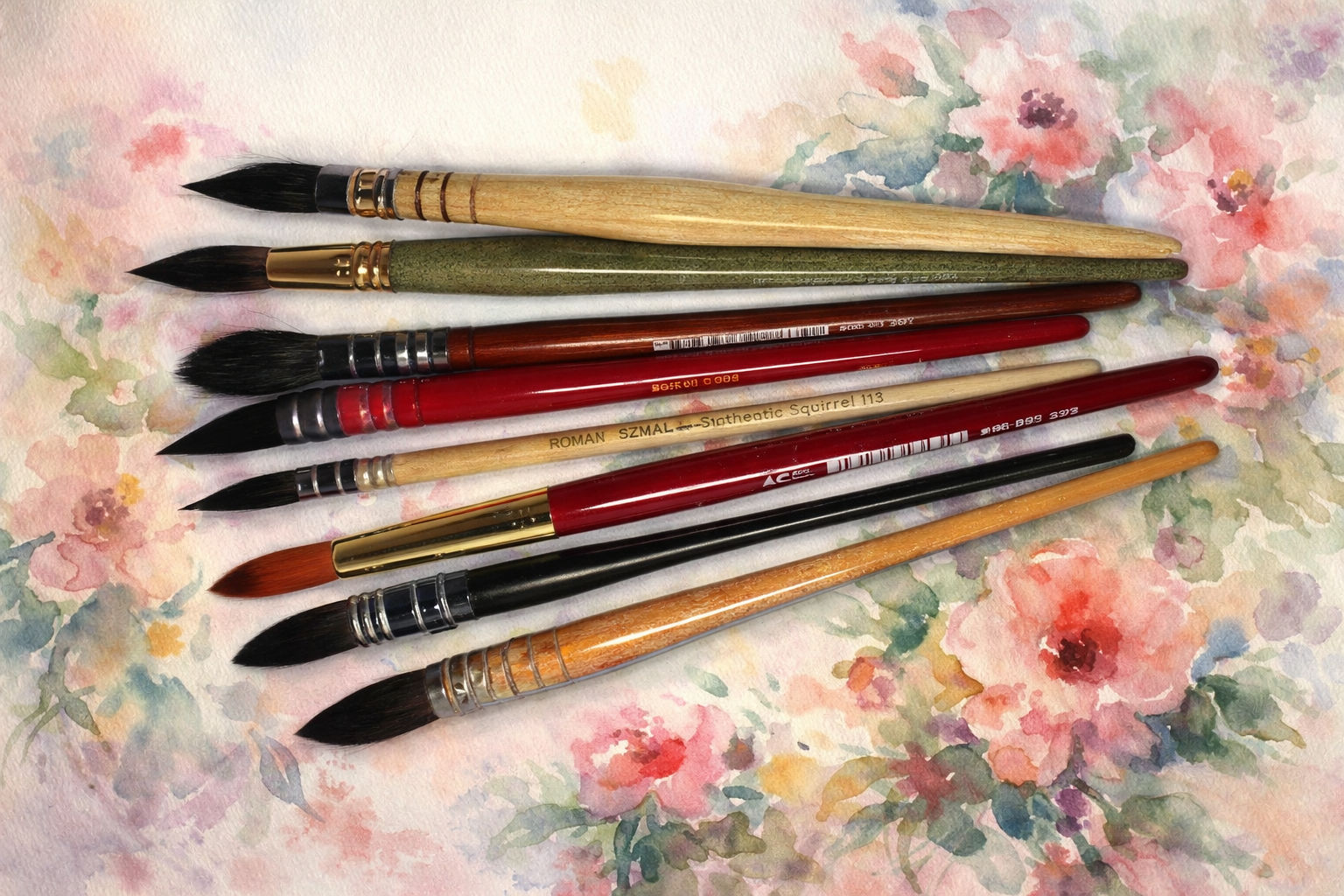
- A Quick Note on Handles: While we’re talking brushes, here’s an easy way to spot a watercolor brush: its handle is shorter than an oil or acrylic brush. Oil painters need longer handles to stand back from the canvas, but we watercolorists work up close, so our handles are designed for precise, comfortable control at the easel or desk.
- The Real-World Scale:
- 000 to 2: The detail ninjas. Perfect for the tiniest lines, eyelashes, or signing your name.
- 4 to 6: The golden retrievers of brushes—friendly, reliable, and can do almost anything. My desert-island pick.
- 8 to 12: The workhorses. Ideal for painting larger shapes, petals, and small washes.
- 14 and up: The big guys. Grab these for skies, backgrounds, and serious water-y effects.
- The Honest Truth: While most major brands are in the same ballpark with their rounds, don’t bet your painting on it. There’s always a little variation.
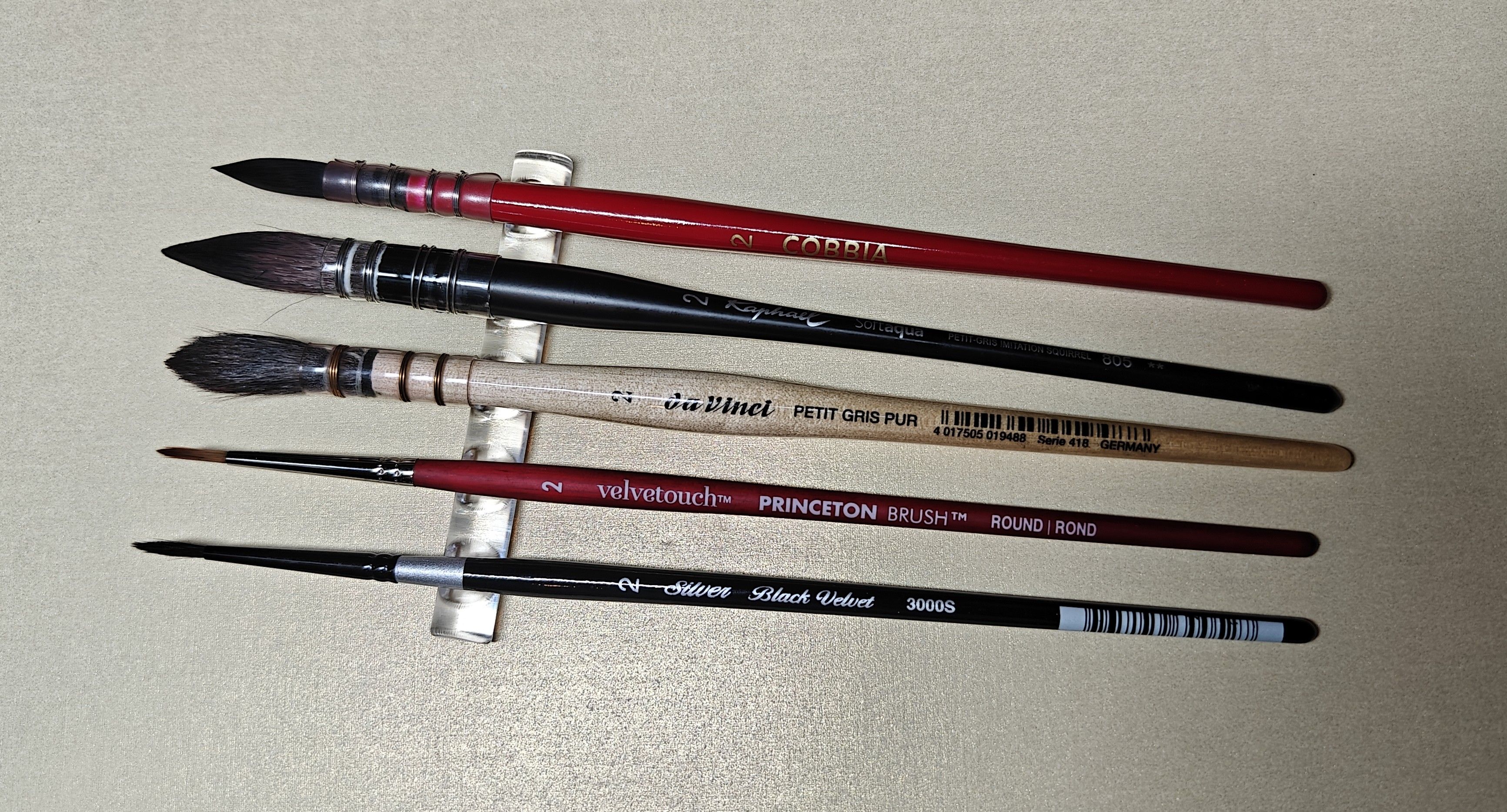
2. Mop Brushes: The Thirsty Cloud Brushes
Here’s where the numbers truly leave reality. Mop sizes are all about water capacity, not precision.
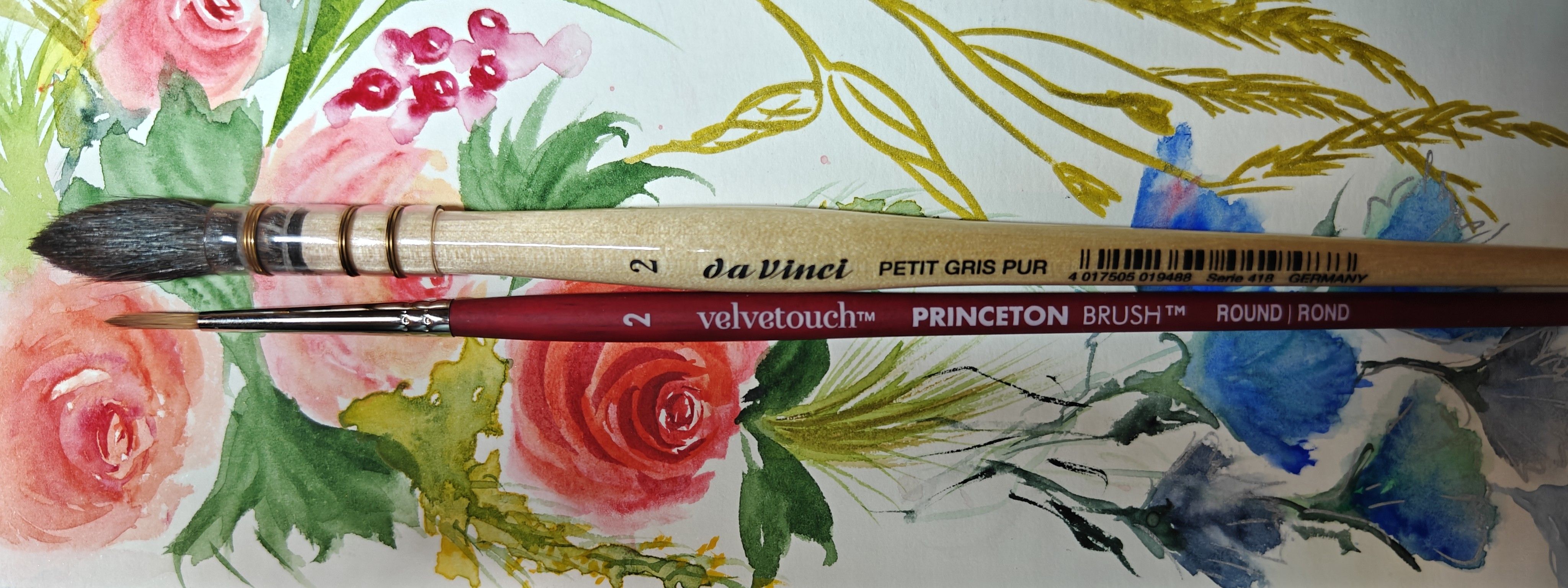
- The Real Deal: A “size 2” mop is just smaller than that brand’s “size 4” mop. But crucially, a size 2 mop will be MASSIVE compared to a size 2 round. They live on different planets!
- Your Takeaway: Please, never compare a mop number to a round number. A #4 mop is a soft, water-holding monster for dreamy washes. A #4 round is your trusty mid-size detail brush. See? Different jobs entirely.
- Spot the Difference: Here’s a physical clue: a classic round brush has hairs secured in a solid metal ferrule. A traditional quill mop (like the famous Raphael 8408) has its hairs bound and set into a natural quill or a plastic sleeve, often held with a delicate metal wire. This quill design is part of what makes it so lightweight and responsive.
Let’s Cut Through the Noise: My “What You Really Need” Chart
Forget the numbers for a second. What do you want to do? This chart matches the job to the tool.
| If you’re trying to paint… | Grab a Round around size… | Or a Mop/Wash Brush around size… |
|---|---|---|
| Super fine details (think veins on a leaf) | 00, 0, 1 | Nope, not a mop’s gig! |
| Everyday details (petals, stems) | 2, 4, 6 | Still not a mop. |
| General painting & smaller washes | 6, 8 | A tiny mop, maybe a 3/0 |
| Nice, juicy skies or loose foliage | 10, 12 | A happy medium mop, like a #2-#3 |
| Big, dreamy, soak-the-paper washes | A 14+ Round or a specialty wash brush | A big, thirsty mop (#4 +). Go for it! |
How to Shop Online Like a Pro (Without the Fear)
Since we can’t all pop into an art store, here’s how I avoid buying the wrong size brush online:
- Read the Reviews (Especially the Photo Ones!): This is your superpower. I always scroll for reviews that say, “Runs large!” or “Much smaller than my Brand X brush.” Customer photos are pure gold.
- Hunt for Actual Measurements: Good product pages will list the hair length and ferrule width in millimeters. This is hard data! Compare these numbers between brushes. For a great example of clear, official sizing, you can check out Jackson’s Art’s excellent guide on their website.
- Learn Your Favorite Brands: Once you learn that, say, Brand A‘s rounds are generous and Brand B‘ are precise, you can shop their lines with confidence. It’s like knowing how your friend’s shoe size runs.
- Ask the Big Question: “Do I need a sharp tip or a big water tank?” Let the job guide you more than the mysterious number.
My Little Secret: When trying a new type of brush from a new brand, I sometimes buy from a shop with a great return policy. There’s no shame in wanting to feel the balance in your hand before you commit. Although, let’s admit, the choices in a brick and mortar stores leave a lot to be desired.
Wrapping It Up
Don’t let the numbers on the handle boss you around. Brush sizing is quirky, but it’s not a mystery. See the size as a hint within a brand’s family, but let the brush’s true personality—detail expert, wash wizard, all-rounder—be what wins you over. Check those reviews, glance at the millimeter specs, and remember the round vs. mop rule. You’ve got this.
Next step if you are ready:
Feeling clearer on brush sizes? Awesome! The next step is matching those brushes to your personal painting style. These guides will help you build your perfect kit: